
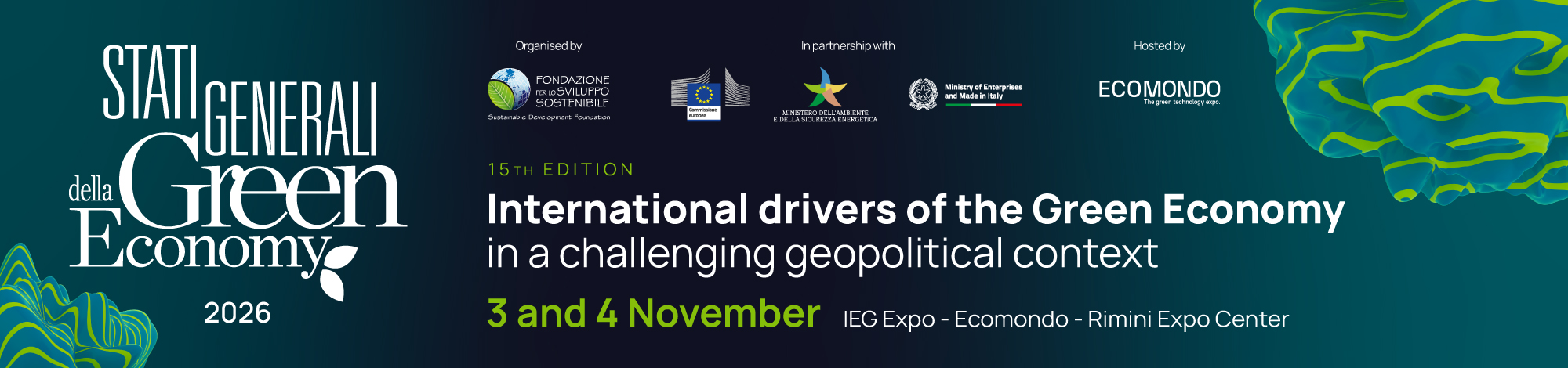
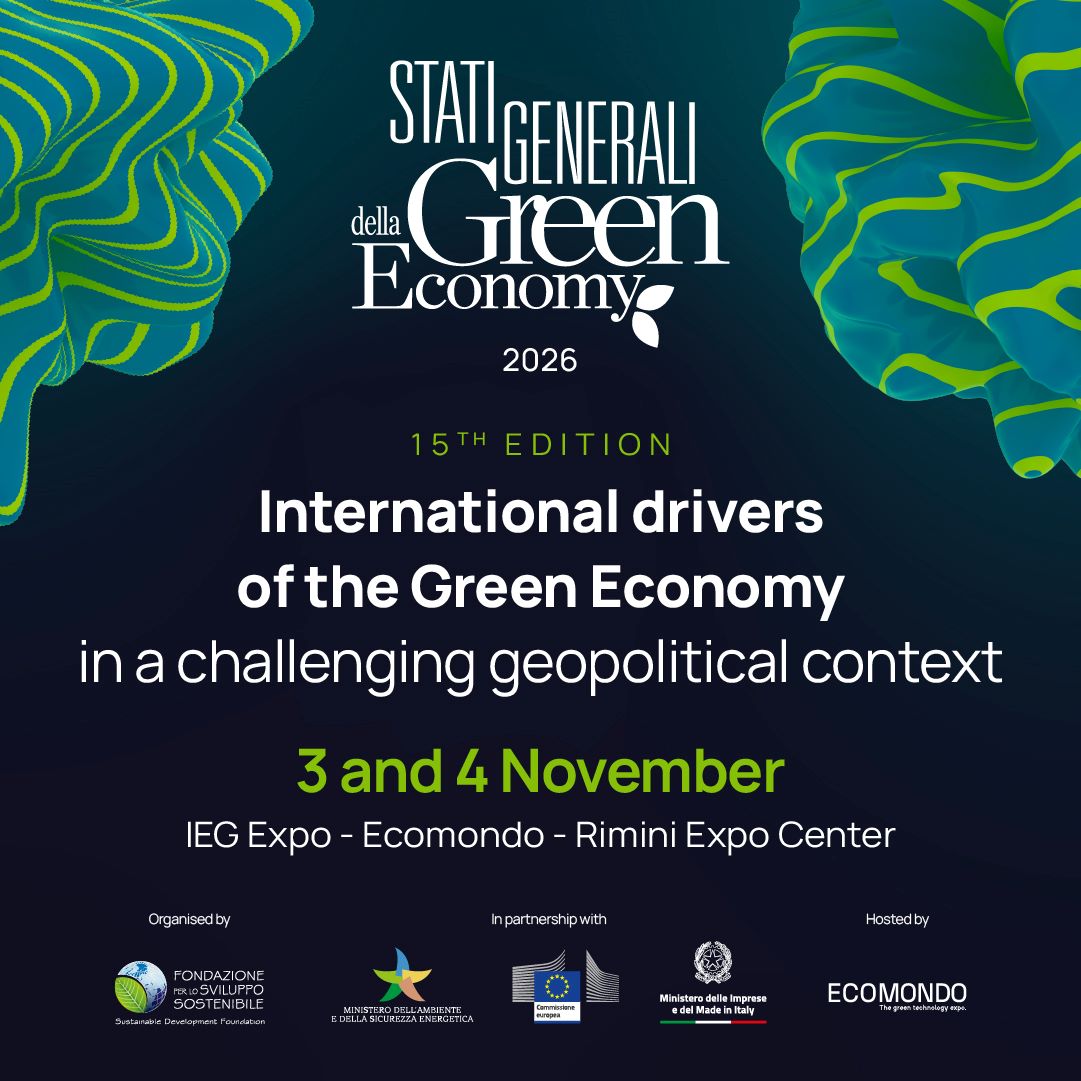
The States General of the Green Economy, the annual event for Italy’s green economy, is organized by the Sustainable Devolpment Foundation in collaboration with the Ministry of the Environment and Energy Security, under the patronage of the European Commission and the Ministry of Enterprise and Made in Italy. It serves as a key reference point for thousands of businesses—and beyond. Between 2012 and 2025, the event has engaged more than 9,000 stakeholders.
The 15th edition of the States General of the Green Economy is dedicated to the theme of the green economy in today’s challenging geopolitical context: no longer only as an environmental agenda, but as an industrial strategy capable of strengthening the competitiveness and resilience of both Europe and Italy. Dependence on imported fossil fuels, together with the heavy reliance on imports of strategic materials essential for development, represents a significant source of vulnerability, linked to both price volatility and security of supply.
In a global context marked by uncertainty and recurring shocks, the States General of the green economy 2026 will explore the green economy as a practical pathway to reducing import dependence, lowering energy costs, and improving efficiency and competitiveness in the use of resources and materials.